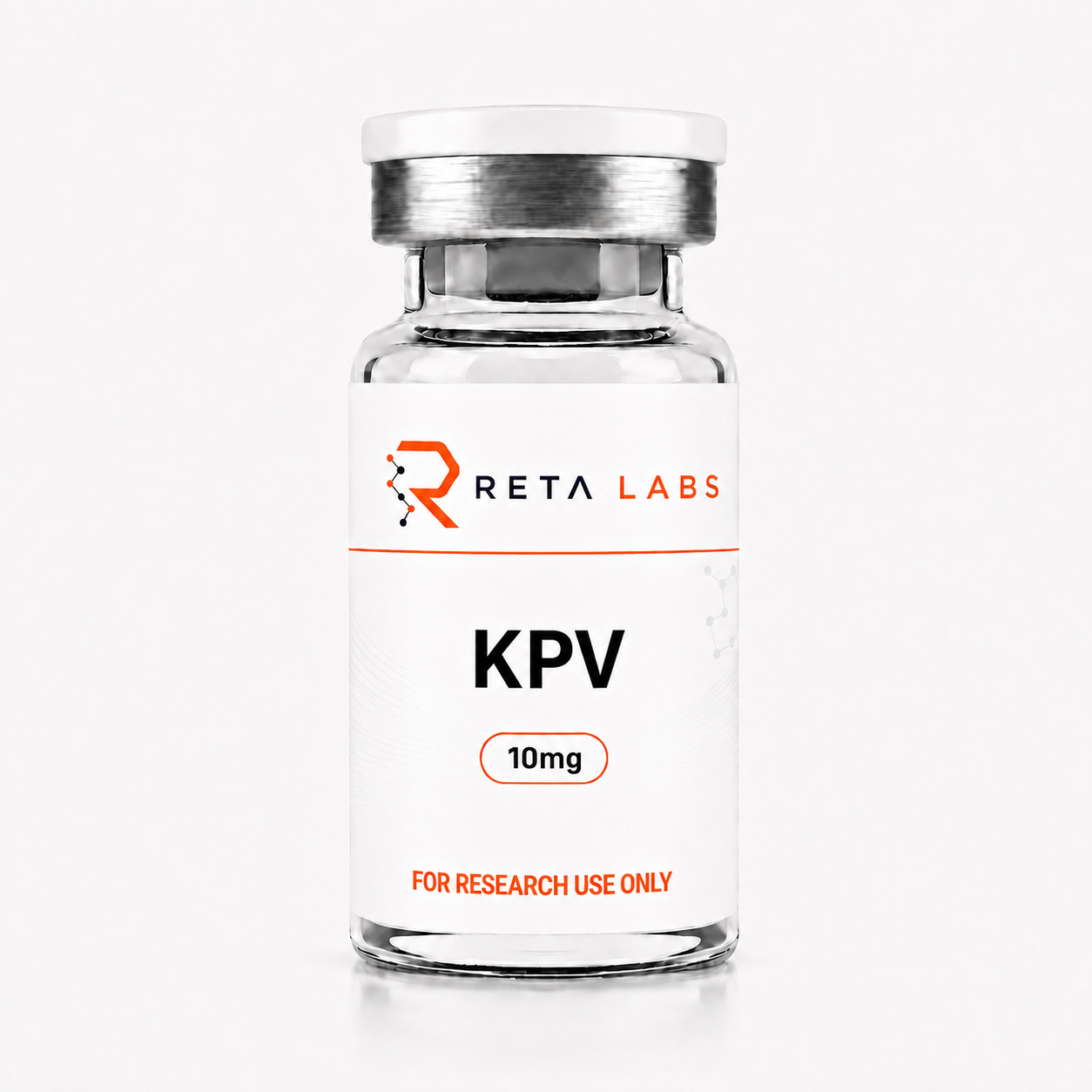
KPV
KPV
In stock
- Lab Tested for Purity & Quality
- Fast & Secure Shipping
- Manufactured in Canada
Couldn't load pickup availability
Product Details
Buy KPV 10mg - Gut & Inflammatory Pathway Support
KPV is a tripeptide consisting of the three C-terminal amino acids of α-melanocyte-stimulating hormone (α-MSH): lysine, proline, and valine. It has been investigated in preclinical research exploring peptide signaling, inflammatory pathways, epithelial biology, and cellular responses.
KPV is of particular interest because it represents a short bioactive sequence derived from α-MSH and has been studied as an experimental tool for examining pathways associated with inflammatory signaling and cellular regulation. Research involving KPV remains primarily preclinical, and findings from laboratory or animal studies should not be interpreted as evidence of human therapeutic efficacy.
Product Details
- Product: KPV
- Net Quantity: 10 mg per vial
- Form: Lyophilized peptide powder
- Purity: ≥99% HPLC-verified
- Identity: MS-verified
- Sequence: Lys-Pro-Val
- Research Grade: Intended for laboratory research applications
- Storage: Store according to the conditions specified on the product documentation; protect from light, moisture, and unnecessary temperature fluctuations
What Makes KPV a Unique Compound
KPV is a particularly small peptide consisting of only three amino acids: lysine, proline, and valine. It corresponds to the C-terminal tripeptide sequence of α-MSH, making it useful in research investigating the biological activity associated with this portion of the larger peptide.
The relationship between KPV and α-MSH makes the compound relevant to studies of peptide signaling and cellular regulation. Researchers have investigated KPV in experimental models involving inflammatory signaling, epithelial responses, and other biological pathways.
Because KPV is substantially smaller than many commonly studied research peptides, it also provides researchers with an opportunity to investigate how a short peptide sequence can participate in biological signaling independently of the larger parent molecule.
Key Research Areas
- Inflammatory Signaling Research: KPV has been investigated in preclinical models examining cellular pathways associated with inflammatory responses.
- Epithelial Biology: Research has explored KPV in experimental models involving epithelial cells and barrier-related biology.
- Peptide Signaling: As a sequence derived from α-MSH, KPV provides a research model for investigating biological activity associated with melanocortin-derived peptides.
- Cellular Response Research: Experimental studies have investigated how KPV may influence cellular signaling and molecular responses under different laboratory conditions.
- Gastrointestinal Research: KPV has appeared in preclinical research examining intestinal and mucosal biology.
- Skin and Barrier Research: Researchers have investigated KPV in experimental models involving epithelial and skin-related cellular processes.
Research Applications
- Inflammatory pathway research
- α-MSH-derived peptide research
- Epithelial cell biology
- Gastrointestinal research
- Skin and barrier biology
- Cellular signaling studies
- Molecular peptide research
- In-vitro and preclinical research models
Related Research Peptides
- BPC-157: Research involving tissue biology and cellular signaling
- GHK-Cu: Research involving extracellular-matrix and skin biology
- TB-500: Research involving cellular migration and tissue biology
- Selank: Research involving peptide signaling and neurobiological pathways
- MOTS-c: Research involving mitochondrial and metabolic biology
Frequently Asked Questions
What is KPV?
KPV is a three-amino-acid peptide consisting of lysine, proline, and valine. It corresponds to the C-terminal sequence of α-melanocyte-stimulating hormone (α-MSH) and has been investigated in preclinical research involving peptide signaling, inflammatory pathways, epithelial biology, and cellular responses.
What does KPV stand for?
KPV refers to the three amino acids that make up the peptide sequence: K for lysine, P for proline, and V for valine.
Is KPV derived from α-MSH?
KPV corresponds to the C-terminal tripeptide sequence of α-MSH. Researchers have therefore investigated KPV as a smaller peptide sequence that can be studied independently of the complete α-MSH molecule.
What is KPV studied for?
KPV is investigated as a research material in areas including inflammatory signaling, epithelial biology, gastrointestinal research, skin and barrier biology, and peptide signaling. Most of the available evidence comes from laboratory and preclinical studies.
Is KPV approved for human use?
KPV products sold through research-peptide suppliers are intended strictly for research purposes and should not be represented as approved human or veterinary therapies. Preclinical findings should not be interpreted as evidence of safety or efficacy in humans.
How is KPV supplied?
KPV is commonly supplied as a lyophilized research peptide. Researchers should follow the storage and handling conditions provided with the specific batch and use appropriate laboratory protocols.
What should researchers look for when purchasing KPV?
Researchers should prioritize clearly documented analytical characterization, including HPLC purity testing, mass-spectrometry identity confirmation, and a batch-specific Certificate of Analysis (COA). Documentation should correspond to the specific lot being supplied.
⚠️ For research use only. Not intended for human or veterinary use. Not a drug, food, or supplement.